
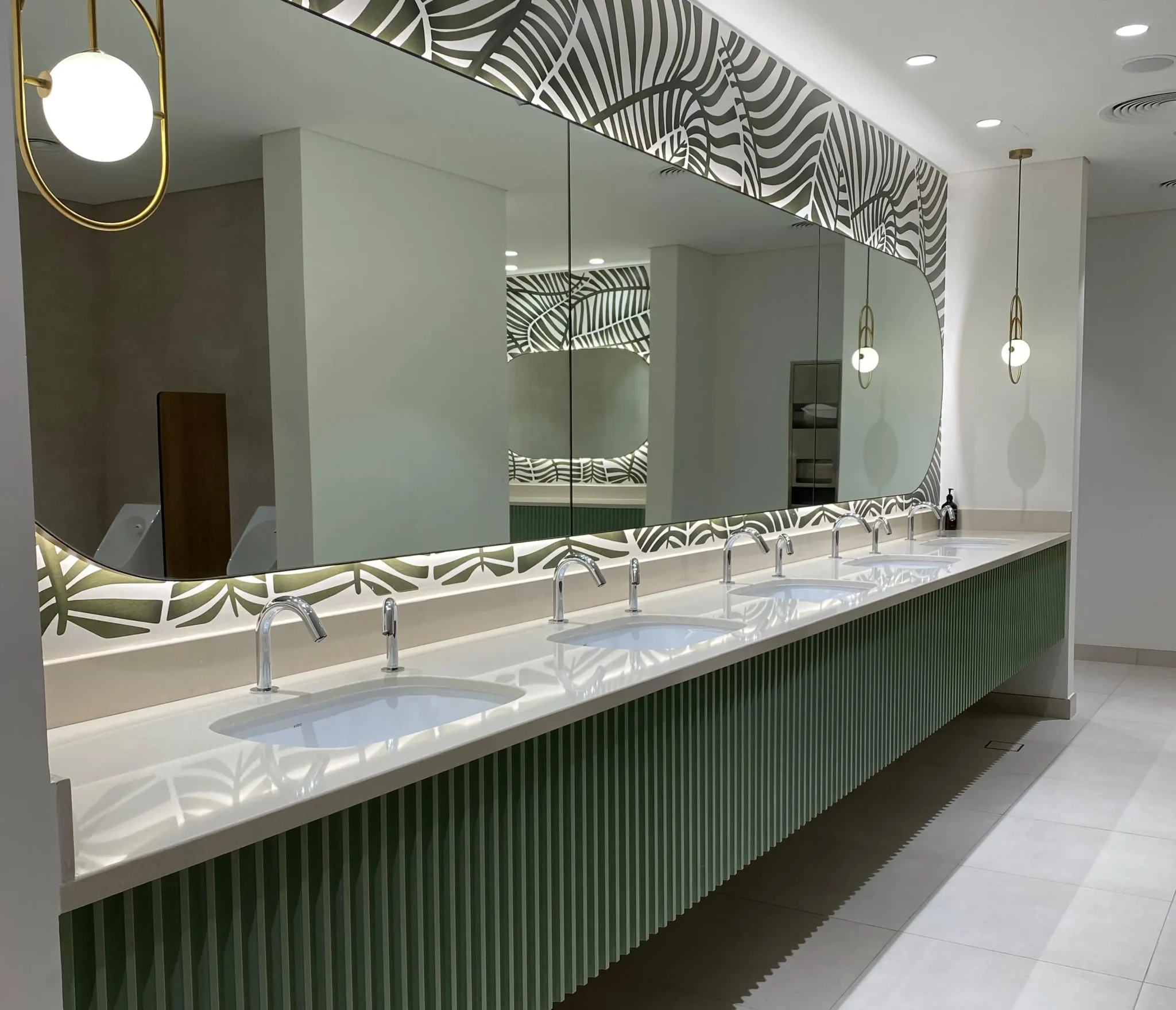
White surfaces may look similar at first glance, but their performance, appearance, maintenance needs, and durability can vary considerably. Natural stone, quartz, porcelain, laminate, and solid-surface materials each have distinct characteristics that affect performance in kitchens, bathrooms, commercial spaces, and other interiors.
White Corian offers a clean, consistent appearance, flexible design possibilities, and practical durability for a range of applications.
A smooth and seamless finish
Corian delivers a smooth surface with minimal visual interruption. Fabricators can join pieces with inconspicuous seams, giving countertops and backsplashes a clean, continuous appearance. This quality suits modern kitchens where simple lines support the overall design.
Quartz, porcelain, marble, and laminate also come in white, but their joints, patterns, edges, and textures produce a different visual character. Corian keeps the finish calm and consistent.
Handling stains and everyday marks
White surfaces can raise concerns about coffee, sauces, oils, and marks. Corian offers a nonporous surface, so spills remain on the surface instead of soaking deep into the material. Routine cleaning with suitable household products helps maintain its appearance. Professionals can also sand and refinish minor scratches and marks.
Marble and some natural stones may call for sealing, while laminate benefits from protection against damage to its surface layer.
Different looks within white
White does not represent one appearance. Corian offers several white shades. Some shades look warmer, while others provide a bright contemporary effect. Quartz also offers many white options, including versions with veins and stone-inspired patterns.
Marble provides natural veining, while porcelain can mimic stone with detailed designs. Corian suits people who prefer a cleaner, uniform surface.
Heat and kitchen performance
Corian handles normal kitchen activity well, but hot cookware should sit on suitable trivets or heat pads. Direct high heat may damage the surface, so sensible countertop habits protect its finish. Quartz also benefits from protection against intense heat because sudden temperature changes may affect the resin content.
Natural stone generally tolerates heat well, while laminate is more sensitive to high temperatures. Each material performs best with suitable care practices.
Repairs and long-term value
Corian offers a useful advantage for homes where countertops receive regular use. Qualified professionals can sand and refinish many surface marks, helping restore a fresh appearance without replacing the entire countertop.
This repair option differs from materials where chips, cracks, or damaged decorative layers may call for extensive work. White Corian also pairs easily with sinks, splashbacks, and wall panels, supporting a coordinated interior with a refined, practical finish.